April 18, 2016

Whole Brain Air Punctuation


The struggle is real, am I right? Poorly capitalized and punctuated work is especially disturbing (is that too strong of a word?) at the end of the school year.

Luckily, I found this little gem on YouTube! I just had to share. It seems like something the kids would get a kick out of, I think! I hope to try it out ASAP.


April 17, 2016

Starting With the Misconceptions


Today I was gathering my thoughts together for Science. This week's topic is the sun, specifically studying what causes day and night, and what causes our shadows to change throughout the day.

My favorite way to begin planning Science, and to engage students is to discover the misconceptions that they may be bringing to their learning. So as I was thinking and researching, I found this great activity on the web, that asks students to address misconceptions or weak language that is often used when discussing the sun and Earth. I just wanted to share! It could be a fun activity to do for a classroom discussion during Science or even during your Morning Meeting if you are working on group behaviors.

It comes from the Solar Energy Center in Florida.  Click below!
Sun Misconceptions Lesson


April 14, 2016

Movie Reviews on YouTube

I found some great movie reviews on YouTube to share with my students as we began our planning for writing Movie reviews! When I looked for reviews to share, I specifically wanted kid-friendly reviews on popular movies that included a summary, adjectives, and examples to back up what they were saying about the movie. Oh, and NO SPOILERS!

I paused the videos to discuss, and sometimes we rewatched different portions with our "writer's eyes", creating a chart of good writing moves and great words the reviewers used.

Check out the videos at these links. I've only embedded one to view here:


Zootopia

Lego Movie

Minions

You may also be interested in checking out my Let's Go To The Movies unit on TPT. My favorite part of this unit is the Movie Ticket "feedback" (student-to-student), and serving up popcorn at our celebration. More on that later!


April 13, 2016

Book Clubs


The kids were excited to start reading for their "Book Clubs" today. 

Which made ME excited, too. Excitement is exactly what I was going for!

I'm considering this a guided independent reading task, with the main focus just being to get students excited about our reading community! It's so tough to keep motivated at the end of the year, so it's nice to do something different. 

They are required to read from this book daily, with their only task being to take some notes as they read. They can record their reactions or questions or anything they think they'd like to talk about when their book club meets. 

I made them baggies filled with their book, a post it stack, and a brand spanking new mechanical pencil. 

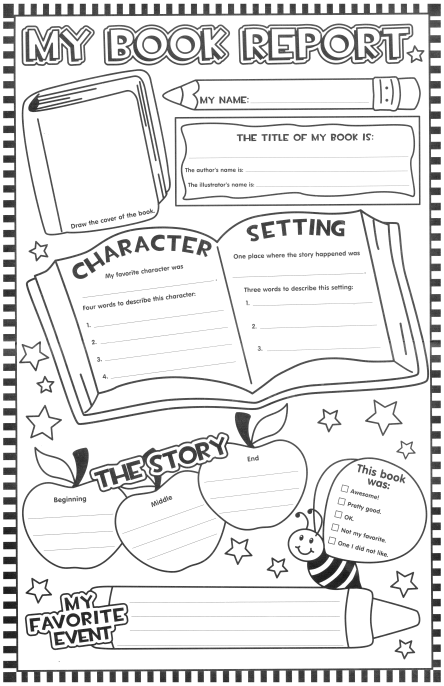
At the end, each book club will meet with me during lunch to eat and discuss. I may bring in some dessert for us to enjoy during this time as well.  Their "ticket" to this book club is to fill out a Book Report poster I found here when they are finished reading their entire book. 

11 x 17 book resport page

It's so tempting to print out reflections for them to do daily, questions for them to answer on each chapter, and the like. However, I know that my most favorite reading at that age was uninterrupted: allowing me a time to imagine, get lost, and enjoy the book world I was in at that moment. 

There will be time for testing review, close reads, and tiered assignments. But for today, we will just be readers. And we will get lost. And we will know that there's nothing else we'd rather be doing. 


April 8, 2016

Beyond the Classroom Discussion: Hand Signals


Yesterday, I wrote this post about Participation Tracking. This is a great tool to help keep up with which of your students are participating and encourage those who are not likely to participate to reflect on their participation and try to improve it.

My sister and I were talking about this tool right after I blogged about it. She's a speech-language pathologist, and the implications it has for collecting social data really excited her. Anyways, I digress. But in our conversation, we both realized that throughout most of our schooling, we were the ones who didn't participate. The smart and shy kids who never had to speak up, and who got to keep being shy and quiet because no one required us to speak up. She said "I feel like that really did a disservice to me, you know?" And I totally agree.

But, we all know there is more to education and student participation than the traditional "class discussion" where one person speaks and others listen and hopefully respond. While I will stick by this method for higher-order discussions, Socratic-style lessons, and constructive lessons, I know that there is plenty of opportunity in the elementary classroom for "All Students Respond" types of participation.

Today, I want to share some of the ways I use hand signaling (or other body signals) to ensure that all students think and respond in a quick and easy way. Keep reading!


Yes or No?

This is an easy one. Are you asking a Yes or No question? Asking the class if they agree with the statement made by either you or a peer? Tell them to show you by using the sign language signal for yes and no.

Count to Show

Ask students to show you "how any ways you can think of" or "how many things you can tell me about" by thinking and putting a finger up for every way. For example, during a Science lesson, you might instruct kids to think of as many examples of how solar energy is used and put a finger up for each way as they think it.

ABC or 123

Playing a multiple choice game or quiz? Teach students how to show the letter choices for AB and C using the American Sign Language Alphabet. Or T and F. Or just have them show 1, 2, or 3 instead! It's an easy way for everyone to get involved!

New Signals for Old Routines

Have you got something that you do weekly or daily that you and the class could come up with signals to show? I use Wilson Fundations for phonics and spelling. In this program, we code all sorts of syllable types! Closed, open, v-e, r-controlled, double vowel.... Anyways, if we are ever spelling and marking words with the classroom letter tiles, I will ask them quickly "Which syllable type?" and they will use one of our symbols to show me. They ended up being a mix of ASL and some other ideas for us! This one has the potential to be a lot of fun because you can get a little silly: signals like sticking your tongue out, making a llama, etc. can breathe a little more fun into simple activities!


A note about ASL:

The Deaf Community is a rich, vibrant, and proud Culture, so we must be very careful when using their language in our classrooms. Cultural appropriation and/versus appreciation can be a hot topic, and so it is important to be knowledgeable about these issues.
Deaf Culture
American Sign Language Article on Wikipedia